Maintaining a compact excavator is crucial for optimal performance and longevity. Industry expert John Smith, a well-known technician with over 15 years of experience, emphasizes the importance of routine checks. He states, “Regular maintenance saves time and money in the long run.” This sentiment rings true when considering the question, "What are the daily maintenance checklists for a compact excavator?"
Daily inspections help identify potential issues before they escalate. A compact excavator requires various checks, including fluid levels, hydraulic systems, and the condition of tracks. Each element deserves attention. A missed detail can lead to costly repairs or downtime. Yet many operators overlook these critical tasks. Ignoring daily maintenance could derail projects and impact profitability.
Understanding proper maintenance routines is vital. Operators must prioritize these tasks to ensure machine reliability. Compact excavators work in rugged conditions, and failure to conduct daily checks can have serious consequences. Awareness of this responsibility enhances not just safety but also extends the machine's lifespan. Balancing operational demands with maintenance needs remains a challenge. Yet, it is a challenge worth addressing for every operator.
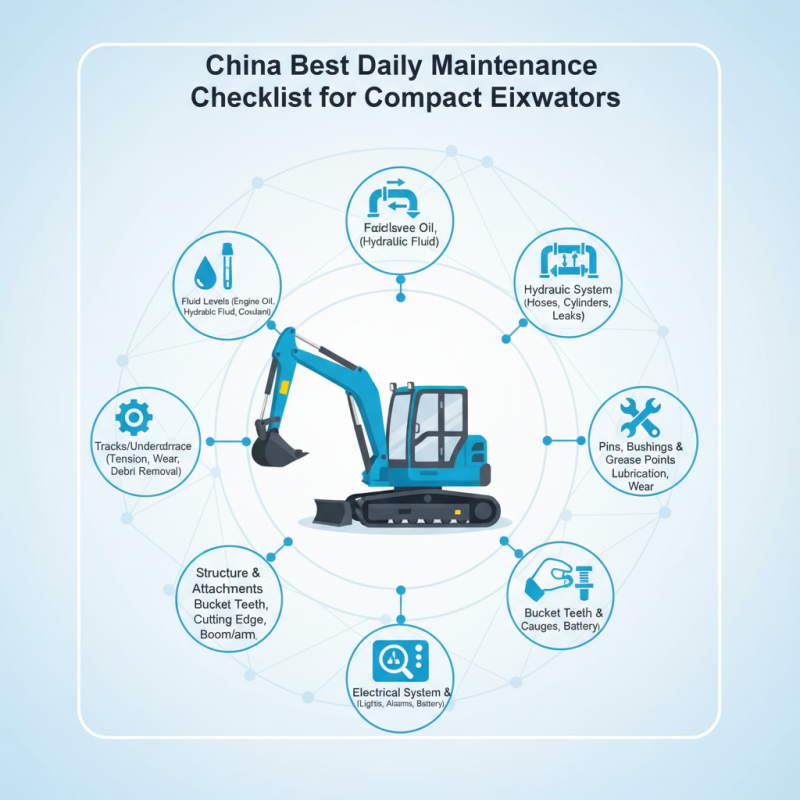
In China's construction industry, compact excavators play a vital role. These machines excel in tight spaces, making them indispensable. Yet, daily maintenance is often overlooked. Neglecting these tasks can lead to costly repairs and downtime. Industry reports indicate that poorly maintained equipment can increase operational costs by up to 30%.
Daily checks should start with fluid levels. Operators must inspect engine oil, hydraulic fluid, and coolant. Low levels might indicate leaks or other issues. Tires and tracks also require attention. An under-inflated tire can reduce fuel efficiency. Regular inspection can prevent flat tires or track damage that would otherwise halt work.
While many operators follow a checklist, some may skip crucial steps. Cleaning the machine after use is vital to prevent rust and corrosion. Ignoring this can affect performance and lifespan. Operators must also review safety features daily. Alarms, lights, and controls should function properly. A malfunction can lead to accidents on site. Daily maintenance is not just a requirement; it’s a critical factor in ensuring safety and efficiency in operations.
Operating compact excavators efficiently requires attention to key parameters. Regular monitoring of engine temperature is crucial. An overheated engine can lead to severe damage and costly repairs. Maintain oil levels to ensure smooth function. Contaminated oil can impair performance. Regular checks can identify potential issues early on.
Hydraulic pressure is another vital parameter. If pressure is too low, it hampers performance. Frequent adjustment or recalibration may be necessary. Additionally, operators should observe fuel consumption rates. A sudden increase can indicate leaks or inefficient operation. Keeping a log can help identify trends and areas for improvement.
Tire condition plays a role in overall performance. Worn tires affect traction and stability. Inspect tires for wear and maintain proper inflation. Neglecting this can cause accidents or reduce efficiency. Regular training for operators can improve operational practices. However, even experienced operators can overlook small details. Continuous learning and reflection are key to achieving optimal performance.
| Maintenance Item | Frequency | Key Operating Parameters | Remarks |
|---|---|---|---|
| Check Engine Oil Level | Daily | Ensure within recommended range | Top up if low |
| Inspect Hydraulic Fluid Level | Daily | Check for leaks and discoloration | Replace if necessary |
| Test Fuel System | Weekly | Check filters and clean as required | Inspect for any signs of leaks |
| Examine Undercarriage | Weekly | Look for wear and tear | Replace parts if needed |
| Clean Air Filter | Monthly | Ensure maximum airflow | Replace if excessively dirty |
| Inspect Tire Pressure | Monthly | Ensure tires are properly inflated | Adjust to manufacturer spec |
Daily maintenance of compact excavators is crucial for their performance and longevity. Focusing on fluid levels can prevent unnecessary breakdowns. Start by checking the engine oil. Low oil can lead to significant engine damage. Ensure the coolant reservoir is filled to the correct level. This prevents overheating during operation. The hydraulic fluid is vital too. Insufficient hydraulic fluid can reduce the machine’s efficiency.
Filters also need attention. Clean or replace air filters regularly. Dirty filters can restrict airflow, affecting engine performance. Fuel filters should not be overlooked either. Clogged filters can lead to fuel supply issues. Regular checks can help maintain optimal function. Lubrication systems are equally important. Ensure that all grease points are adequately lubricated. Ignoring lubrication can cause wear and tear on critical components.
It is essential to develop a routine for these checks. A simple checklist may help, but ensure you are thorough. These daily tasks might feel tedious, yet they are necessary for prolonged machine life. Missing a step could lead to severe issues later. Reflect on your maintenance habits frequently. Small adjustments today can make a significant difference in the long run.
Advanced maintenance technologies for compact excavators are revolutionizing the industry. Service alerts and tracking systems play a crucial role in mitigating downtime. Reports indicate that proper maintenance reduces equipment failure by up to 30%. This not only saves money but also improves efficiency at job sites.
The integration of remote monitoring tools enables real-time data access. Operators can receive alerts about performance issues before they escalate. A study from an industry think tank showed that companies implementing these technologies saw a 25% increase in productivity. However, not every operator utilizes these systems effectively. Some may overlook regular checks, leading to unexpected breakdowns.
Tracking systems also provide insights into maintenance history. This data is invaluable for planning future services. Yet, many operators still rely on outdated logbooks. Low-tech approaches can lead to misinformation and oversight. Embracing technology is essential, but the transition can be cumbersome for some. Operators must not forget that regular training is important for maximizing these advanced tools.
Preventive maintenance for compact excavators is essential for enhancing machine performance and longevity. In China, industries are increasingly adopting structured schedules to ensure efficiency. Reports indicate that a well-implemented maintenance program can reduce equipment downtime by up to 30%. Regular inspections and timely servicing can dramatically extend a machine's lifespan.
Daily checks should encompass fluid levels, filter cleanliness, and hydraulic performance. Implementing a checklist helps operators identify issues early. For example, maintaining proper hydraulic fluid levels can prevent significant damage and costly repairs. Interestingly, many operators overlook minor leaks, which can escalate and lead to substantial downtime.
Education is critical. Workshops on best practices can improve operator awareness. A lack of training has been cited as a major reason for preventable issues. Research shows that companies investing in operator training experience 25% fewer maintenance-related breakdowns. The recognition of these industry challenges encourages a shift toward better preventative strategies.
: Regularly checking engine temperature is crucial to avoid severe damage and costly repairs.
Low hydraulic pressure hampers performance and may require frequent adjustments or recalibration.
Daily checks on fluid levels can prevent unnecessary breakdowns and ensure smooth operation.
Worn tires reduce traction and stability, increasing the risk of accidents and decreasing efficiency.
Operators may overlook minor leaks and small details that lead to larger issues.
A checklist helps operators identify issues early and enhances routine maintenance practices.
Proper training helps reduce maintenance-related breakdowns by increasing operator awareness and skills.
Ignoring lubrication can lead to wear and tear on critical components, affecting machine lifespan.
They help avoid significant damage and ensure the machine operates efficiently.
Well-implemented programs can reduce equipment downtime by up to 30%, enhancing overall efficiency.
The article "China Best Daily Maintenance Checklist for Compact Excavators" provides a comprehensive overview of the essential daily maintenance needs for compact excavators in China. It emphasizes the importance of understanding key operating parameters that contribute to optimal performance. To ensure these machines run efficiently, operators are guided on the essential daily checks, which include monitoring fluids, filters, and lubrication systems.
Additionally, the article explores advanced technologies in maintenance, such as service alerts and tracking systems, which help streamline upkeep procedures. Industry best practices for establishing preventive maintenance schedules are also discussed, addressing what are the daily maintenance checklists for a compact excavator to maximize reliability and longevity. Overall, the guidance aims to enhance equipment performance while minimizing downtime through proactive maintenance strategies.

BTEra Excavator