Using a mini excavator to remove large tree stumps can be both efficient and safe when done correctly. Industry reports indicate that around 60% of landscaping professionals utilize mini excavators for stump removal due to their versatility and power. According to John Thompson, a landscaping expert at GreenScape Solutions, “Mastering how to use a mini excavator to remove large tree stumps can dramatically enhance your workflow.” This statement underlines the importance of using the right techniques for a successful outcome.
When handling tree stumps, one must consider factors like stump size, root structure, and soil type. A mini excavator offers the ability to dig deep and maneuver in tight spaces, which is crucial when dealing with stubborn roots. However, operators must be aware of potential risks, such as damaging underground utilities or surrounding landscape features. Often, operators find themselves rushing the process but taking time for proper planning leads to better results.
Moreover, experience plays a vital role in mastering this task. Each stump presents unique challenges, which require operators to adapt their methods. Sharing insights and learning from mistakes can be beneficial. Emphasizing technique, precision, and caution allows for an effective and safe stump removal process.
Understanding the Basics of Mini Excavators for Stump Removal
Mini excavators are powerful tools for tree stump removal. Understanding their basic functions is essential for effectiveness and safety. These machines typically weigh between 1 to 10 tons, making them versatile for many tasks. Operators must grasp how to maneuver them properly. A quick adjustment can make a big difference in efficiency.
Learning about the different attachments is crucial. For stump removal, a digging bucket or a grapple can be most effective. The digging bucket allows for deep excavation, while the grapple can help lift heavier pieces. However, using the wrong attachment may slow the process or cause damage. Operators need to assess the stumps and soil conditions before deciding.
Experience is necessary for mastering mini excavators. New users often feel overwhelmed. It’s vital to practice in a safe area first. Mistakes can happen, such as digging too deep or not maintaining balance. Reflecting on these experiences aids improvement. Stump removal can be challenging, but with the right knowledge and approach, it becomes manageable.
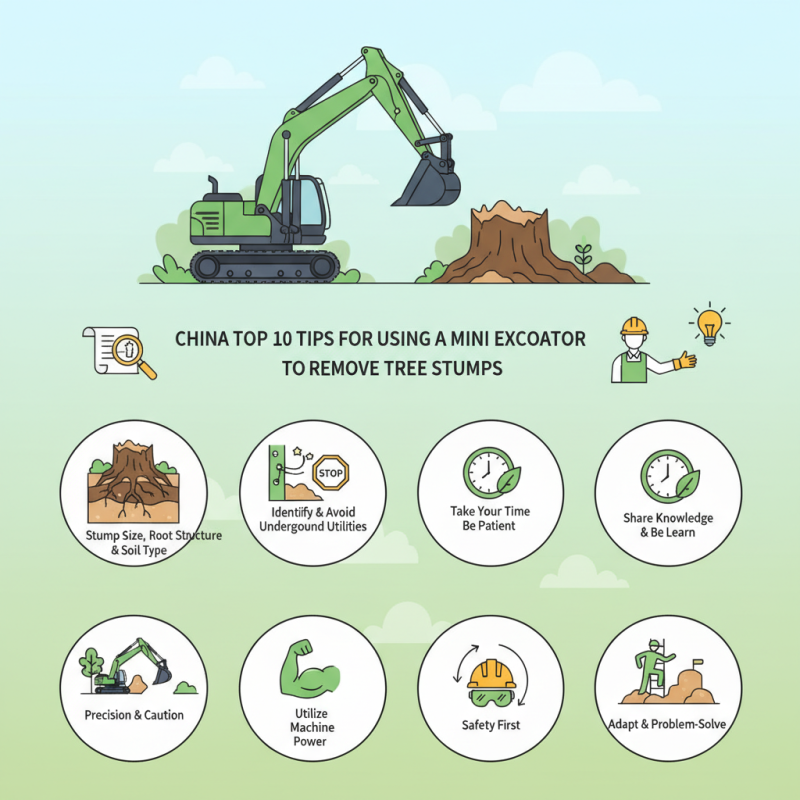
China Top 10 Tips for Using a Mini Excavator to Remove Tree Stumps
| Tip Number |
Tip Description |
Advantages |
| 1 |
Check the Area for Utilities |
Prevents damage to underground lines |
| 2 |
Choose the Right Attachment |
Enhances efficiency and effectiveness |
| 3 |
Position the Excavator Correctly |
Optimal leverage for stump removal |
| 4 |
Dig Around the Stump |
Reduces resistance and eases removal |
| 5 |
Cut Main Roots if Necessary |
Facilitates easier extraction |
| 6 |
Utilize the Arm for Leverage |
Increases pulling power |
| 7 |
Control Speed Carefully |
Ensures precision and safety |
| 8 |
Take Breaks When Needed |
Prevents fatigue and maintains performance |
| 9 |
Dispose of Stump Properly |
Complies with local regulations |
| 10 |
Maintain Your Equipment |
Ensures longevity and performance |
Choosing the Right Mini Excavator for Your Tree Stump Project
Choosing the right mini excavator for removing tree stumps requires careful consideration. Mini excavators range in size and power, impacting their effectiveness. According to the American Rental Association, about 82% of construction professionals prefer compact equipment for landscaping projects. A mini excavator’s weight influences its performance; lighter machines may struggle with larger stumps. Selecting the right model ensures efficiency and safety.
Engine power plays a significant role too. Typically, 20-30 horsepower is ideal for most residential stump removal tasks. The digging depth is another vital aspect. Many mini excavators can dig depths of 6-10 feet, making them suitable for various stump sizes. Research shows that operators often underestimate the time and effort needed for stump removal, leading to frustration. Ensure your equipment matches the job’s demands for better results.
Comfort and ease of use are also worth noting. The operator's experience with mini excavators varies widely. Some machines have ergonomically designed controls, which enhance usability. A less user-friendly model can lead to mistakes, affecting efficiency. Balancing power and operator comfort is key to a successful stump removal. Consider these factors to make an informed choice for your project.
Essential Safety Precautions When Operating a Mini Excavator
Operating a mini excavator for tree stump removal requires attention to essential safety precautions. According to OSHA, around 4,700 injuries occur annually in the construction sector. This highlights the necessity of adhering to safety protocols. Operators must wear appropriate personal protective equipment (PPE), which includes hard hats, steel-toe boots, and high-visibility vests.
Before starting the machine, it's crucial to inspect it thoroughly. Check for leaks, damaged parts, or loose connections. A small oversight can lead to severe accidents. Training is also vital. Statistics show that trained operators are 70% less likely to experience accidents. Ensure you understand the controls and functions of the mini excavator before any operation. Moreover, always be aware of your surroundings. Bystanders need to be kept at a safe distance while work is in progress.
Properly securing the work area is another vital step. Mark the area clearly to avoid any unexpected intrusions. Understanding the terrain can prevent costly mistakes or equipment damage. Lastly, communication with team members is essential. Clear signals and regular check-ins can prevent miscommunication, which is a common factor in many accidents. Regular safety meetings can reinforce these practices and encourage a culture of safety.
Step-by-Step Process for Efficiently Removing Tree Stumps
Removing tree stumps with a mini excavator can be an efficient process. Start by assessing the area around the stump. Ensure there is enough space for the excavator to maneuver. Clear away rocks and debris. This preparation sets the stage for effective removal.
Position the mini excavator close to the stump. Use a digging bucket to break up the soil around the base. Dig deep enough to expose the roots. Be cautious; some roots can be large and tough. This step often requires patience and careful digging. Moving too quickly can snap the roots, making the task harder.
Once the roots are exposed, use the excavator to tilt and lift the stump. Apply consistent pressure while maintaining control. Sometimes the stump may resist. If so, reassess the roots and dig further. This part can be frustrating, but analytical thinking helps. Understanding how the roots spread will improve your technique. With practice, stump removal becomes smoother.
Best Practices for Disposal and Cleanup After Stump Removal
Removing tree stumps with a mini excavator is only part of the job. After the removal, proper disposal and cleanup are crucial. It is essential to consider the environmental impact of stump disposal. Studies show that improper disposal can lead to soil degradation and pest infestations. According to the Environmental Protection Agency, more than 30% of landfills are filled with organic waste, such as tree stumps.
After extraction, ensure that the remaining debris is removed thoroughly. Leaving pieces behind can attract pests, such as termites or beetles. These insects can spread to nearby structures. In fact, pests originating from stumps contribute to nearly $5 billion in damages annually. Consider chipping the stump into mulch for landscaping projects. This can be a sustainable solution and reduces waste.
Cleaning the area around the stump is equally important. Assess the soil and check for any remaining roots. If left in place, roots can continue to grow or decay improperly. This might lead to uneven ground and future landscaping challenges. Engage with local waste management for proper disposal methods, as regulations vary widely by region. Taking these steps ensures a thorough job done right.
FAQS
: Wear hard hats, steel-toe boots, and high-visibility vests. Safety gear is essential.
Inspect for leaks and damage. A small oversight can lead to serious accidents.
Trained operators are 70% less likely to have accidents. Proper knowledge is key.
Clearly mark the area to prevent unexpected intrusions during the operation.
Familiarity with the terrain can prevent costly mistakes and equipment damage.
Clear signals and regular check-ins can prevent miscommunication and accidents.
Assess the area and ensure there is space for the excavator to maneuver.
Dig deep to expose the roots. Patience is needed as some roots can be tough.
Reassess the roots and dig further if necessary. This can be a frustrating process.
With practice, you'll better understand root structures, making removal smoother.
Conclusion
This article provides a comprehensive guide on how to use a mini excavator to remove large tree stumps effectively. It begins with an overview of the basics of mini excavators tailored for stump removal, emphasizing the importance of selecting the right model based on the scale of the project. Safety is paramount, and the article outlines essential precautions to take while operating the equipment to prevent accidents.
Furthermore, it details a step-by-step process that maximizes efficiency during the stump removal, ensuring a smoother workflow. Finally, the article covers best practices for disposal and cleanup after the stumps have been removed, emphasizing the importance of leaving the site tidy and safe. Overall, this guide serves as a valuable resource for anyone looking to tackle tree stump removal with a mini excavator.

 BTEra Excavator