When considering the best tools for landscaping, mini excavators stand out. These machines offer versatility and efficiency, making them essential for any landscaping project. According to renowned landscaping expert Emily Thompson, “Choosing the right mini excavator attachments can transform your workflow and outcomes.” This highlights the importance of selecting the right equipment.
What are the best mini excavator attachments for landscaping? The answer lies in understanding the specific needs of your project. Attachments such as augers, buckets, and trenchers increase productivity. They help you dig holes, move soil, and create landscapes. However, not all attachments are suitable for every job.
While many tools exist, it's crucial to assess your landscaping goals. Take time to consider both functionality and limitations. Effective landscaping requires planning and the right gear. Investing in quality attachments can lead to stunning results. Yet, be aware that over-reliance on equipment can lead to mistakes. Thoughtful selection of attachments is key to success.
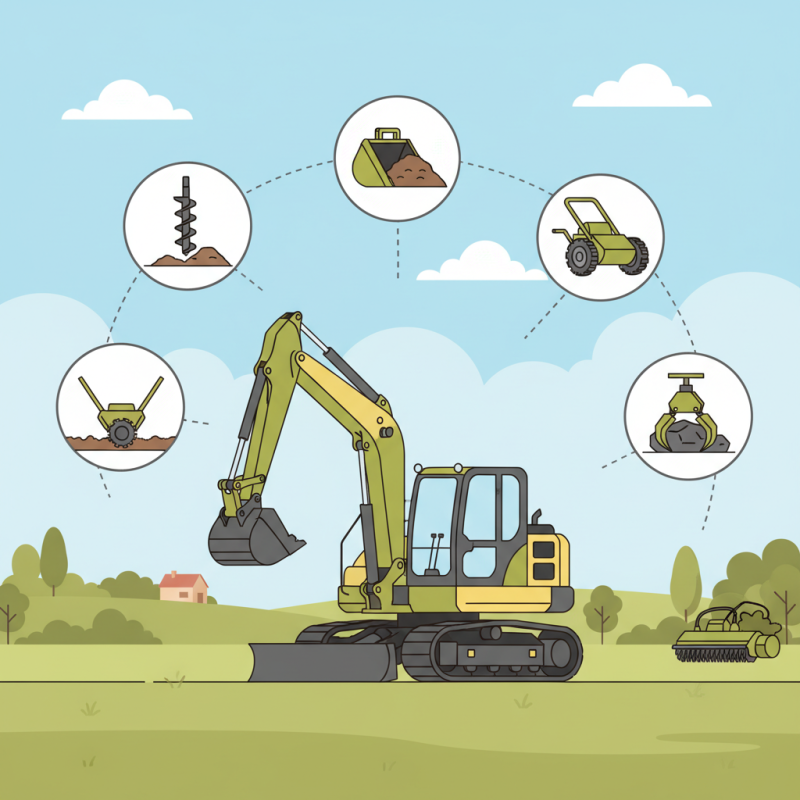
Essential Attachments for Mini Excavators in Landscaping Projects
Mini excavators are invaluable tools in landscaping projects. They enhance efficiency and versatility. Choosing the right attachments greatly influences project outcomes. Here are some essential attachments that can transform your landscaping efforts.
A digging bucket is fundamental. It allows for precise excavation and soil removal. This attachment is perfect for creating flower beds or small ponds. Consider the size based on your project. A smaller bucket can be nimble, while a larger one offers greater capacity.
Soil augers are another great addition. They make digging holes easy. This is especially useful for planting trees and large shrubs. However, they might struggle with rocky ground. You may need to switch to a digging bucket in such cases.
Using a landscape rake can help clear debris and level the ground. It prepares the site for sod or seeding. However, it requires proper technique. Ensure the rake is leveled correctly to avoid uneven surfaces.
Tips: Regular maintenance of attachments is crucial. Clean them after use to extend their lifespan. Additionally, always assess your site conditions before selecting an attachment. Each project varies, and adaptability is key.
Bucket Options: Versatile Choices for Various Landscaping Tasks
When it comes to landscaping, choosing the right bucket attachment for mini excavators can significantly impact project efficiency. Various bucket options cater to tasks like digging, grading, and even light demolition. According to a 2021 industry report, using specialized buckets can enhance productivity by up to 30% compared to standard ones.
Different sizes of buckets serve different needs. For example, a wide, shallow bucket is ideal for moving large volumes of loose materials. In contrast, a deep, narrow bucket excells in precision digging around existing plants and structures. However, it’s critical to match the bucket size with the excavator's capacity to avoid mechanical strain. Overloading can lead to unexpected wear and reduced lifespans, prompting further maintenance challenges.
It's also important to reflect on the learning curve associated with these attachments. Operators need to practice and familiarize themselves with how each bucket performs. Mishandling can result in inefficient operation or damage to the site. Continual assessment of attachment effectiveness can lead to better decisions in future projects. Investing time to understand the capabilities of each bucket will ultimately drive landscaping success.
Grading Attachments: Achieving Smooth and Level Soil Surfaces
Grading attachments are essential tools for landscaping projects. They help achieve smooth and level soil surfaces, crucial for planting and construction. These attachments can efficiently manage surface materials. From grading uneven ground to reshaping areas, they play a vital role in preparation.
When using a grading attachment, one must consider the soil type. Sandy soil behaves differently than clay. Each requires specific approaches to ensure proper leveling. A common mistake is rushing the process. Taking time to adjust settings leads to better results. Uneven surfaces can cause drainage issues, leading to larger problems later.
Incorporating grading attachments enhances landscaping efforts. However, it’s important to remain patient. You may need to make several passes to achieve the perfect grade. Practice improves skill and understanding of the equipment. With experience, the grading process becomes smoother and more efficient. Every project offers learning opportunities to enhance future work.
Top 5 Mini Excavator Attachments for Landscaping Success
| Attachment Type |
Description |
Benefits |
Ideal Uses |
| Grading Blade |
A flat blade used for leveling soil and grading. |
Creates smooth surfaces, excellent for road prep. |
Land grading, road base leveling. |
| Angle Blade |
A blade that can be angled for detailed grading. |
Offers precision in shaping landscapes. |
Ditch digging, creating slopes. |
| Root Rake |
Used to remove roots and debris from the ground. |
Enhances clean-up of sites and soil prep. |
Land clearing, landscaping prep. |
| Hydraulic Hammer |
A powerful attachment used for breaking ground. |
Great for tough materials, efficient breaking. |
Breaking concrete, demolishing hard surfaces. |
| Auger |
Used for drilling deep holes into the ground. |
Perfect for making post holes quickly. |
Fence installation, planting trees. |
Augers: Efficiently Digging Holes for Planting and Fencing
Augers are essential tools for landscaping projects. They provide a powerful means of digging holes effectively for planting trees, shrubs, or installing fencing. A well-designed auger can significantly reduce manual labor, saving time and effort. According to data from the Association of Equipment Manufacturers (AEM), using augers can improve hole excavation efficiency by up to 30% compared to traditional methods.
The versatility of augers is noteworthy. They come in various widths and lengths, allowing for different applications. For example, a 6-inch diameter auger is ideal for planting small trees, while an 18-inch model works well for larger plants or wide fence posts. However, users must consider soil conditions. Rocky or compacted soil may hinder performance, requiring adjustments or alternative solutions. In fact, around 25% of landscaping professionals report challenges when using augers in tough terrains.
Careful selection and proper use of augers lead to superior results. Understanding how to match the auger's size with the job's requirements is crucial. Proper maintenance is also vital. Regular checks can prevent breakdowns during critical tasks. Many landscape professionals overlook this aspect, leading to delays. Overall, augers enhance productivity, but a thoughtful approach to their use is necessary for landscaping success.
Landscape Rakes: Perfecting Soil Preparation and Earth Shaping
Landscape rakes are essential for soil preparation and earth shaping in landscaping projects. They help create a smooth and level surface, essential for successful planting and installation of hardscapes. A study from the National Association of Landscape Professionals indicates that effective soil preparation can increase plant health by up to 30%. This highlights the importance of using quality attachments like landscape rakes on mini excavators for various landscaping tasks.
Using a landscape rake improves weed control and reduces soil compaction. It efficiently removes debris and levels the ground, ensuring an even seed bed. When using this attachment, consider adjusting the angle for optimal results. Angling the rake can help in achieving a finer finish or deeper soil penetration, depending on the project requirements. Also, regular maintenance is crucial. A well-maintained rake ensures consistent performance and prolongs its lifespan.
When operating a mini excavator with a landscape rake, pay attention to the ground conditions. Soft or muddy soil can lead to uneven surfaces. If the rake starts to clog, disconnect it and clear any debris. Always review your techniques and adjust as needed, as each landscape presents unique challenges. Remember, learning from each project enhances your skills and helps in future landscaping endeavors.
FAQS
: A digging bucket allows for precise excavation and soil removal. It is ideal for creating flower beds or small ponds.
Soil augers simplify digging holes. They're useful for planting trees and large shrubs but may struggle in rocky ground.
Consider the soil type, as sandy and clay soils behave differently. Each requires unique approaches for leveling.
Proper technique ensures even surfaces. If not leveled correctly, it may lead to uneven ground for sod or seeding.
Regular cleaning extends the lifespan of attachments. It also ensures they perform better on future projects.
Rushing the grading process is a frequent mistake. Taking time adjusts settings for better, smoother results.
Practice enhances understanding of equipment. Each project provides learning opportunities to improve future grading work.
Uneven surfaces can lead to drainage issues. These problems may escalate if not addressed during initial grading.
Each project varies in requirements. Assessing site conditions helps select the right attachment for optimal results.
Patience is essential. Sometimes, several passes are needed to achieve the desired smooth and level grade.
Conclusion
When considering landscaping projects, understanding "what are the best mini excavator attachments for landscaping" is essential for achieving optimal results. Among the most vital attachments are bucket options, which provide versatility for a range of tasks, from moving soil to reshaping terrain. Grading attachments ensure the creation of smooth and level soil surfaces, critical for establishing a solid foundation for any landscaping endeavor.
Additionally, augers play a crucial role in efficiently digging holes for planting trees or setting up fences, while landscape rakes are designed for perfecting soil preparation and earth shaping. By utilizing these essential attachments, professionals and DIY landscapers alike can enhance their efficiency and effectiveness, leading to successful and aesthetically pleasing outdoor spaces.

 BTEra Excavator