What Size Trailer Do I Need for a 3 Ton Mini Excavator?

Time:2026-05-16 Author:Mason
0%

Choosing the right trailer for a 3 ton mini excavator is crucial for safe transport. The weight of a 3 ton mini excavator typically ranges from 5,000 to 7,000 pounds, depending on the model. It is essential to ensure that your trailer can handle this weight. According to industry reports, trailers must have a Gross Vehicle Weight Rating (GVWR) sufficient to carry this load safely.

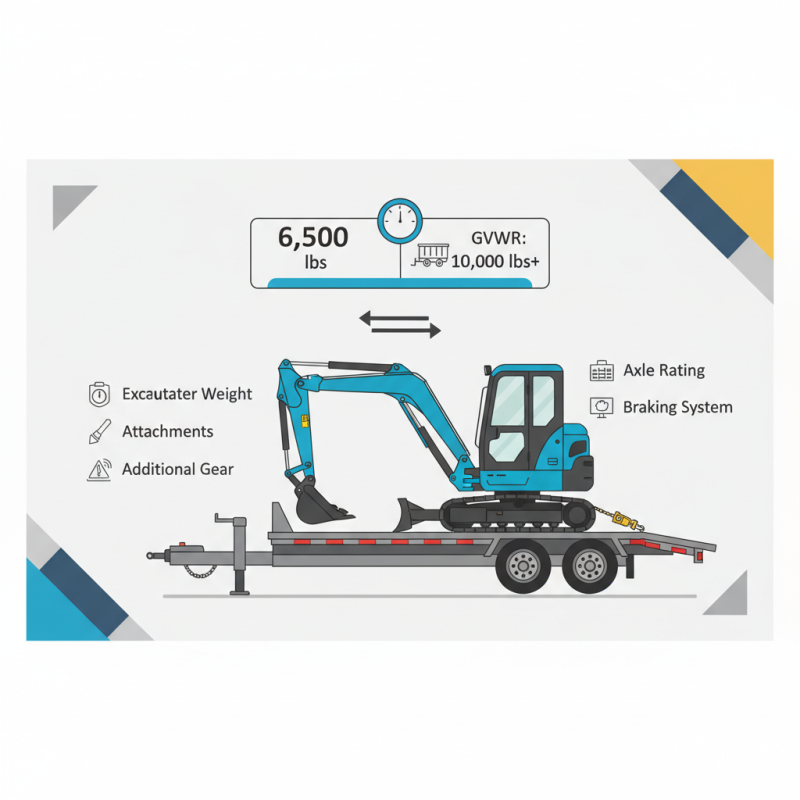
Understanding "What size trailer do I need for a 3 ton mini excavator" hinges on considering the excavator's weight, attachments, and additional gear. A flatbed trailer with a GVWR of at least 10,000 pounds is often recommended. Additionally, don’t forget the trailer’s axle rating and braking system. The right trailer also provides stability during transit.

A mismatch can lead to significant risks, both for the operator and the equipment. Improper loading can lead to accidents. It's not just about the weight; proper weight distribution is vital for safety. Regularly reviewing industry standards helps prevent transport failures. This focus on detail can make a major difference in securing your mini excavator during transport.
What Size Trailer Do I Need for a 3 Ton Mini Excavator?

Determining the Gross Vehicle Weight Rating (GVWR) for Trailers

When selecting a trailer for a 3-ton mini excavator, understanding the Gross Vehicle Weight Rating (GVWR) is paramount. The GVWR is the maximum weight your trailer can safely carry. This includes the weight of the trailer itself plus any cargo. For a 3-ton mini excavator, the combined weight often exceeds 6,000 pounds. Therefore, a trailer with a GVWR of at least 7,000 pounds is recommended to allow for additional equipment, such as buckets or tools.

Industry reports indicate that properly matching your trailer to your machinery can enhance safety and efficiency. For instance, a mismatch between a trailer's GVWR and the load can lead to dangerous driving conditions. Additionally, many states and municipalities require adherence to specific weight regulations. Failing to comply may result in fines or equipment damage. Professional organizations recommend accounting for the weight of any additional gear and ensuring a clear load distribution.

Choosing the right trailer can be complex. A trailer that's too heavy can incur unnecessary costs. Meanwhile, a trailer that's too light may pose safety risks. Often, buyers overlook the importance of securing their load. Overloading even a properly rated trailer can lead to instability. Keeping your loading needs in mind is crucial when evaluating your options.

Understanding Mini Excavator Dimensions and Weight Distribution

When considering the right trailer for a 3-ton mini excavator, understanding dimensions and weight distribution is vital. Mini excavators typically weigh around 6,000 to 8,000 pounds. Therefore, the trailer must support this weight effectively. Look for trailers that have a gross vehicle weight rating (GVWR) of at least 10,000 pounds. This allows for safe transport without exceeding weight limits.

Weight distribution matters greatly for stability on the road. A well-balanced load prevents swaying during transit. Positioning the mini excavator at the trailer's center can help achieve an even distribution. Always check the trailer's axle ratings as they help inform load capacity. Incorrect loading can lead to accidents or damage on the road, which is something to avoid.

It's easy to overlook smaller aspects, such as trailer length and width. Ensure that the trailer can accommodate the mini excavator's dimensions. Sometimes, a slightly larger trailer may be necessary if the excavator has additional attachments. Reflection on your trailer choice is crucial for safe and efficient transport. It’s best to consult with experts if uncertain about your loading strategy.

Calculating Trailer Capacity: Clearances and Weight Limits

When selecting a trailer for a 3-ton mini excavator, the key is understanding weight limits and clearances. A trailer must support the weight of the excavator comfortably. A common choice is a tandem axle trailer, which can handle higher capacities. This type ensures stability during transport.

Check the gross vehicle weight rating (GVWR) before purchase. The trailer should support the combined weight of the excavator and any additional equipment. A miscalculation could cause handling issues or damage. Leaving extra room for the load is wise. Adding straps and supports will enhance safety.

Here are some tips to consider. Always inspect the trailer’s condition before loading. Look for any signs of weaknesses. This can save you from accidents. Remember to account for the height of the excavator. Ensure your vehicle matches the trailer’s towing capacity. If in doubt, consult with a professional for advice. Having a clear plan is crucial.

Trailer Size Requirements for 3 Ton Mini Excavators

This chart illustrates the essential specifications for a trailer suitable for transporting a 3-ton mini excavator, including the required capacity, dimensions, and clearance needed to safely transport the equipment.

Choosing the Right Trailer Type: Equipment vs. Flatbed Trailers

When selecting a trailer for a 3-ton mini excavator, the type of trailer is crucial. Equipment trailers are specifically designed for heavy machinery. They usually feature a lower deck height, making loading and unloading easy. Flatbed trailers are versatile but may not offer the same level of convenience. For a mini excavator, an equipment trailer is often the preferred option due to its stability and secure loading features.

According to industry research, a 3-ton mini excavator typically measures around 16 to 20 feet in length. This size dictates that your trailer should be at least 18 feet to accommodate the excavator safely. Additionally, weight capacity is vital; ensure the trailer has a minimum capacity of 10,000 pounds. This accounts for the excavator's weight and any additional gear.

Tips: Always check your local regulations regarding trailer dimensions and weight limits. Ensure the trailer has proper tie-down points to secure your equipment. Regularly inspect your trailer for wear and tear to prevent issues during transport. Loading a heavy excavator can strain an improperly rated trailer, leading to potential safety hazards. It's worth reflecting on these points, as a sturdy trailer can significantly impact transport safety.

What Size Trailer Do I Need for a 3 Ton Mini Excavator?

Trailer Type Weight Capacity (lbs) Length (ft) Width (ft) Common Features
Equipment Trailer 7,000 - 10,000 14 - 20 6 - 8 Ramps, D-rings, Toolboxes
Flatbed Trailer 6,000 - 12,000 16 - 24 6 - 8.5 Open Deck, Tie-Downs, Versatile
Tilt Trailer 6,000 - 10,000 14 - 18 6 - 7 Easy Load, Hydraulic Lift, Low Ground Clearance

Important Safety Regulations for Transporting Heavy Equipment

Transporting a 3-ton mini excavator requires careful attention to safety regulations. The U.S. Department of Transportation (DOT) emphasizes that all heavy equipment must be securely fastened to the trailer. According to the National Highway Traffic Safety Administration (NHTSA), inadequate restraint can lead to serious accidents. Proper tie-down techniques are critical. Using at least four tie-downs can help ensure the excavator remains stable during transit.


Weight distribution is another crucial factor. The trailer's Gross Vehicle Weight Rating (GVWR) must exceed the combined weight of the trailer and the excavator. A report from the American Society of Civil Engineers states that improper weight distribution can cause trailers to sway or even tip over, increasing risks on the road. It’s essential to position the mini excavator toward the front of the trailer. This way, the weight is evenly distributed over the axles, promoting better control.


Additionally, be sure to check local regulations. Different states may have varying requirements for transporting heavy equipment. Some areas mandate permits for loads exceeding certain dimensions. It's wise to consult a local authority before transport. Exploring these regulations helps avoid fines and enhances safety for everyone on the road. While many operators assume they understand these rules, a surprising number overlook important regulations, leading to unfortunate consequences.

FAQS

: How do I choose the right trailer for a mini excavator?

: Select a trailer that supports the excavator's weight and is stable. A tandem axle trailer is often suitable.

What is GVWR and why is it important?

Gross Vehicle Weight Rating (GVWR) indicates the maximum weight a trailer can safely carry, including the excavator and equipment.

What safety checks should I perform before loading?

Inspect the trailer for weaknesses. Look for cracks or rust that could affect safety during transport.

How many tie-downs do I need for securing the excavator?

Use at least four tie-downs to securely fasten the excavator, preventing movement during transit.

Where should I position the excavator on the trailer?

Position the mini excavator towards the front. This helps maintain proper weight distribution and control.

What local regulations should I be aware of?

Check your local laws for transportation requirements. Some places need special permits for oversized loads.

What could happen if weight distribution is poor?

Improper weight distribution can cause the trailer to sway. This increases the risk of accidents on the road.

How can I ensure safe transport of heavy equipment?

Always have a clear plan, use appropriate tie-downs, and follow all safety regulations to enhance transport safety.

Should I consult a professional if unsure about trailer capacity?

Yes, if in doubt about the trailer’s capacity or setup, consulting with a professional is advisable.

What are common mistakes people make in transporting heavy equipment?

Many overlook safety regulations or proper weight distribution. These oversights can lead to serious accidents and consequences.

Conclusion

When considering "What size trailer do I need for a 3 ton mini excavator," it's essential to evaluate various factors such as the Gross Vehicle Weight Rating (GVWR) for trailers and the specific dimensions and weight distribution of the mini excavator. Understanding these aspects aids in selecting a trailer that not only accommodates the excavator's weight but also meets safety regulations.

Next, calculating the trailer capacity involves checking clearances and overall weight limits to ensure safe transportation. Choosing the correct type of trailer is crucial, whether it's an equipment trailer designed for heavy machinery or a flatbed trailer that offers versatility. By adhering to important safety regulations for transporting heavy equipment, operators can ensure a secure and efficient transport process for their mini excavator.

Mason

Mason

Mason is a seasoned marketing professional with a deep expertise in the company's offerings and a passion for driving brand awareness. With a strong background in digital marketing strategies, he has an innate ability to connect with diverse audiences and effectively communicate product benefits.......