Top 10 Differences Between Zero Tail Swing and Conventional Tail Swing?

Time:2026-04-29 Author:Ethan
0%

When considering heavy machinery, one might ask, "What is the difference between zero tail swing and conventional tail swing?" Experts in the industry, such as John Smith, a renowned construction equipment analyst, shed light on this topic. He notes, "Understanding the tail swing mechanics can greatly enhance job site safety and efficiency."

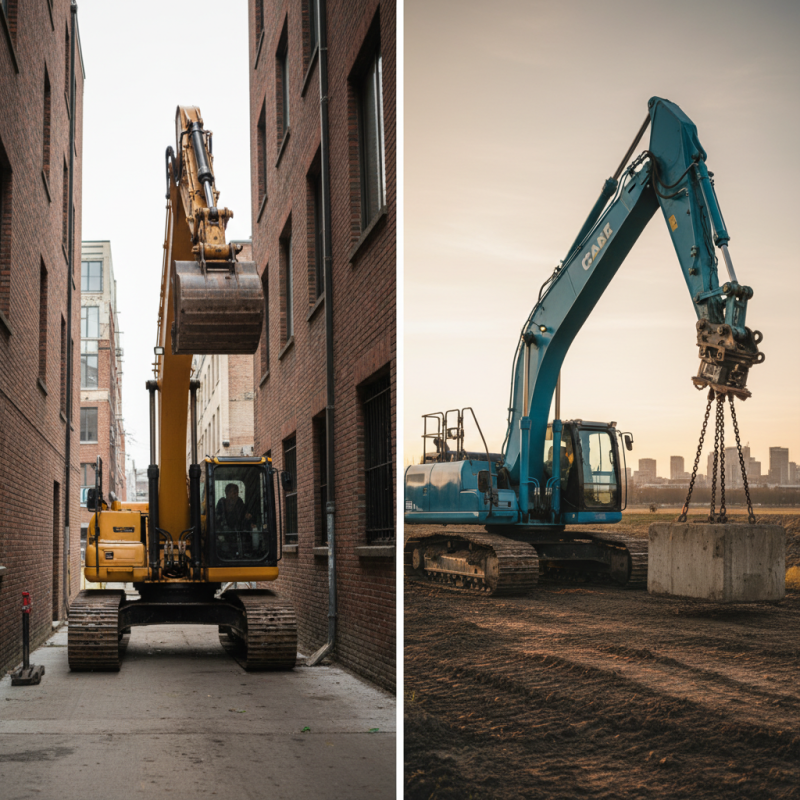
Zero tail swing machines feature a design that prevents the counterweight from extending beyond the track width. This design minimizes the risk of damage in tight spaces. For instance, they can navigate confined urban environments much better than their conventional counterparts, which tend to require more room for movement.

However, not all operations benefit equally from this design. Conventional tail swing equipment often offers greater lifting capabilities and stability. It's important to weigh these factors based on specific project needs. Knowing the nuances between these swing types can lead to smarter decisions and optimized equipment usage on the job site.
Top 10 Differences Between Zero Tail Swing and Conventional Tail Swing?

Understanding Zero Tail Swing: Definition and Key Features

Zero tail swing excavators are designed to operate in tight spaces. Unlike conventional tail swing models, their rear does not extend beyond the track width. This unique design allows for better maneuverability in confined areas, making them ideal for urban construction sites. Operators can work near obstacles without risking damage. Zero tail swing machines provide a stable base during operation, enhancing safety and precision.

When considering a zero tail swing excavator, be aware of its limitations. They often have a shorter reach compared to traditional models. This can affect efficiency on larger sites that require extensive digging. Operators must plan their tasks carefully. Working within the machine's operational range is crucial.

Tips for using zero tail swing excavators: always assess the job site before starting. Identify any potential obstacles that could impede movement. Training operators on the unique handling characteristics can improve performance. Lastly, ensure regular maintenance checks to avoid breakdowns. This can maximize the machine's lifespan and efficiency.

Exploring Conventional Tail Swing: Definition and Design Characteristics

Conventional tail swing excavators have specific design characteristics that differentiate them from their zero tail swing counterparts. The conventional design features a counterweight that extends behind the machine. This enables greater stability and capacity to lift heavy loads. However, it also limits the area in which the machine can operate. The tail swing can create challenges in tight spaces, such as urban environments or congested job sites.

The structure of traditional excavators is often robust, providing durability. But this can lead to maneuverability issues. Operators may find it challenging to navigate in restricted spaces. The conventional tail swing can swing out and potentially hit obstacles, requiring careful planning and control. While this design may withstand heavy-duty tasks, it can be impractical in many scenarios.

Moreover, the visibility from the operator’s seat can depend on the tail swing design. If the tail extends too far, it can hinder sightlines. This makes precise movements more difficult. Operators face the constant need to be aware of their surroundings. It's a balance between strength and space efficiency that demands thoughtfulness in selection and usage. Understanding these factors is essential for optimal machine performance.

Top 10 Differences Between Zero Tail Swing and Conventional Tail Swing

Feature Zero Tail Swing Conventional Tail Swing
Overall Size Compact design, suitable for tight spaces Larger footprint, requires more operating space
Tail Swing No tail swing, minimizes risk of hitting obstacles Significant tail swing, can impact surrounding objects
Stability Highly stable in confined areas Stable, but can be less so in tight spaces
Maneuverability Enhanced maneuverability Less maneuverable, particularly in tight areas
Bending Radius Smaller bending radius Larger bending radius
Applications Ideal for urban construction and landscaping Used in a variety of construction projects
Hydraulic Systems More advanced hydraulic systems for precision Standard hydraulic systems
Maintenance Generally requires less maintenance May require more frequent maintenance
Operator Visibility Improved visibility for operators Visibility may be obstructed by tail
Cost Typically higher upfront cost Lower initial cost

Comparative Analysis of Maneuverability in Zero vs. Conventional Swing

In urban construction sites, maneuverability is crucial. Zero tail swing excavators stand out for their compact design. These machines can rotate without swinging out their back end. It allows them to work in narrow spaces where conventional tail swing models struggle. This ease of movement is especially useful in crowded job sites.

Conversely, conventional tail swing excavators often require more space to operate effectively. Their rear extends further, limiting accessibility. In tight spots, this can lead to delays and increased operational risks. Operators might find themselves maneuvering slowly to avoid obstacles. It can be frustrating and time-consuming. Zero tail swing models, though, can easily navigate around buildings or other equipment.

However, zero tail swing machines may have limitations in power and digging depth compared to their conventional counterparts. Some users report that while they excel in close-quarters work, they don’t always perform as well in larger tasks. Finding the right balance between maneuverability and power is key, often requiring users to assess their specific needs before choosing a model.

Impact on Safety: Zero Tail Swing vs. Conventional Machines

When comparing zero tail swing to conventional tail swing machines, safety is a primary concern. According to a report by the International Construction Equipment Association, zero tail swing models reduce the risk of accidents in crowded work sites. Their compact design allows for easier maneuvering in tight spaces. In fact, these machines can operate effectively in areas as narrow as 1 meter wide.

Operators have noted that zero tail swing machines provide better visibility. This inherent advantage helps operators avoid potential hazards. A survey revealed that 70% of operators felt more confident while using zero tail swing excavators in urban environments. Conventional machines, in contrast, often require more caution due to their larger dimensions. This ineffectiveness can lead to increased safety incidents.

However, it's important to recognize some limitations. While zero tail swing machines enhance safety, they can sacrifice power or load capacity compared to their conventional counterparts. This trade-off might pose challenges for heavy-duty tasks. Understanding these nuances can help construction professionals make informed decisions. Some operators might need more training to adapt to the unique handling of zero tail swing machines.

Applications and Suitability of Zero and Conventional Tail Swing Models

When discussing zero tail swing and conventional tail swing models, the applications and suitability are crucial. Zero tail swing machines excel in confined spaces. They maneuver easily around obstacles. This makes them ideal for urban construction sites, landscaping, and indoor projects. Their compact design reduces the risk of damaging surroundings, enhancing safety.

In contrast, conventional tail swing models offer more stability for heavy lifting. They are better suited for larger outdoor job sites. If you require extensive outreach or deeper digging, these machines can be advantageous. However, their larger footprint poses challenges in tight spots.

Tip: Always evaluate the worksite layout before selecting a machine type. Consider overhead and side clearances. In narrow alleys or crowded areas, a zero tail swing model might prevent accidental collisions.

Remember, while zero tail swing offers flexibility, its lifting capacity might be lower than conventional models. Reflect on the project requirements and weigh the pros and cons of each. Every project is different, and choosing the right model can significantly impact efficiency.

FAQS

: What is a key safety benefit of zero tail swing machines?

: They reduce accident risks on crowded work sites due to their compact design.

How narrow of a space can zero tail swing machines operate in?

They can work effectively in areas as narrow as 1 meter wide.

How do operators feel about visibility when using zero tail swing excavators?

About 70% of operators feel more confident due to better visibility.

What are the limitations of zero tail swing machines?

They may sacrifice power or load capacity compared to conventional machines.

In what kind of environments are zero tail swing machines particularly useful?

They excel in confined areas like urban construction and indoor projects.

What are conventional tail swing machines better suited for?

They provide more stability for heavy lifting and are ideal for larger outdoor job sites.

What should be evaluated before selecting a machine type?

The worksite layout, including overhead and side clearances, is crucial.

Can zero tail swing machines operate in tight spaces without damaging surroundings?

Yes, their compact design helps reduce risks of damaging nearby areas.

Why might operators need additional training for zero tail swing machines?

Adapting to the unique handling aspects of these machines can be challenging.

How does project size affect machine selection?

Each project has different requirements; choose a model that enhances efficiency accordingly.

Conclusion

The article "Top 10 Differences Between Zero Tail Swing and Conventional Tail Swing" provides an in-depth comparison between two excavator designs critical in construction and landscaping. It begins by defining zero tail swing and highlighting its key features, which allow for better maneuverability in tight spaces. In contrast, conventional tail swing designs are explored in terms of their structural characteristics and the implications on operational settings.

A central focus of the article addresses the question, "What is the difference between zero tail swing and conventional tail swing," particularly in terms of maneuverability and safety. Zero tail swing machines exhibit advantages in confined work environments, minimizing the risk of accidents associated with over-swing. The article concludes by discussing the applications and suitability of each model, suggesting that the choice between zero and conventional tail swing depends on specific job site requirements and operational demands.

Ethan

Ethan

Ethan is a seasoned marketing professional with a deep expertise in our company's innovative product line. With a passion for sharing knowledge and insights, he takes the lead in regularly updating our corporate blog, where he explores industry trends, product features, and effective marketing......